Contact us






Although they may not show it, dogs also experience pain under certain circumstances, and it’s important to promptly identify the cause and find a solution.
Observe your dog and ask yourself these questions: is he really in pain? Is he suffering from an illness or recovering from surgery? Are there any visible symptoms? Is he behaving differently than usual?
The first step is to consult a veterinarian immediately: only a correct diagnosis will allow you to understand the source of the pain and choose the most appropriate treatment, whether it’s a painkiller for dogs or a natural supplement like CBD.
Let’s take a look at the most common pharmacological and natural options:
| Category | Product / Substance | Active ingredient | Main use | Important notes |
| Prescription painkillers (veterinary drugs) | Rimadyl | Carprofene | Pain and inflammation from osteoarthritis or surgery | Veterinary NSAIDs, may cause effects on the liver or stomach |
| Previcox | Firocoxib | Chronic joint pain (especially in older dogs) | High tolerability, but requires veterinary supervision | |
| Onsior | Robenacoxib | Acute post-operative pain or inflammation | Also used in cats, for short periods | |
| Metacam | Meloxicam | Musculoskeletal pain and inflammation | Requires hepatic and renal monitoring |
| Category | Product / Substance | Active ingredient | Main use | Important notes |
| Natural and non-prescription alternatives | CBD oil for dogs | Cannabidiol (CBD) | Joint pain, inflammation, anxiety, post-operative recovery | Non-psychotropic, safe if THC-free, supported by scientific studies |
| Omega-3 | EPA (eicosapentaenoic acid), DHA (docosahexaenoic acid) | Joint support, inflammation reduction | Natural anti-inflammatory effect | |
| Turmeric | Curcumin | Joint and muscle pain | Improves when combined with piperine (black pepper) | |
| Boswellia serrata | Boswellic acids | Chronic pain and joint inflammation | Action similar to NSAIDs, but more delicate |
We reiterate once again the importance of consulting a veterinarian, even if you decide to administer a natural remedy, to avoid or limit side effects.
How to tell if my dog is sick
To first determine if your dog is truly sick, we can rely on some behavioral signs, including:
- The dog licks itself constantly, even to the point of bleeding;
- The dog barks much more than normal;
- The dog becomes antisocial and tries to stay away from its owner;
- The dog becomes aggressive and refuses to be approached.
Physical changes may also occur:
- Weight or hair loss: If your dog loses weight or hair for no apparent reason, it could be a sign of malnutrition or illness.
- Eye or nasal discharge: If your dog has abnormally colored eye or nasal discharge, he may have an infection.
- Difficulty breathing: If he’s labored or has trouble breathing, he may have a respiratory problem.
- Vomiting or diarrhea: If he’s vomiting or has diarrhea, he may have a digestive problem or food poisoning.
Your dog can’t tell you if he’s sick, so it’s important to be alert to any changes in his behavior or appearance.
When to use a painkiller for your dog
As we mentioned, the use of painkillers for dogs should always be discussed with your veterinarian. Remember that only a veterinarian can assess the situation and prescribe the most appropriate medication, as well as the dosage and duration of treatment.
In general, however, painkillers for dogs can be used in cases of:
- Acute pain: post-operative pain, trauma, wounds;
- Chronic pain: such as arthritis, dysplasia, cancer;
- Pain associated with systemic diseases: kidney disease, heart disease.
One important thing: do not overuse medications. The first essential step is always to identify the exact cause of your dog’s discomfort. Once identified, the next step is to determine whether painkillers can be effective in resolving the problem.

Painkillers for a limping dog
A limping dog is most likely suffering from joint pain, inflammation, or injury, and it’s important to choose a safe and effective painkiller to help him feel better. Among natural painkillers for dogs, CBD stands out, increasingly used to improve mobility and reduce pain in dogs, without the side effects of traditional medications.
Let’s see what science says.
A 2020 study evaluated the efficacy of cannabidiol (CBD) oil administered orally transmucosally as part of a multimodal analgesic regimen in dogs with spontaneous osteoarthritis. Dogs receiving CBD (2 mg/kg every 12 hours) in addition to a pharmacological protocol including an anti-inflammatory drug, gabapentin, and amitriptyline, showed significant improvement in Canine Brief Pain Inventory scores compared to dogs that did not receive CBD.
In another, more recent study from 2023, improvements in clinical signs were observed in certain conditions, particularly osteoarthritis (pain and mobility), itching, and epilepsy as an adjuvant.
The results showed that CBD not only does not interfere with other medications, but can actually enhance their effectiveness, allowing for a reduction in the dosage of conventional painkillers.
This synergistic effect makes CBD a valuable choice for those seeking a natural alternative or support for traditional treatments. Studies and clinical experience confirm that it is well tolerated by all animals, offering a safe option for improving a dog’s quality of life.
Types of painkillers for dogs
Let’s take a look at the types of medications commonly used to relieve our dog’s pain:
- Opiates: These are used for respiratory depression, loss of appetite, vomiting, diarrhea, or as a relaxant/sedative;
- Alpha-antagonists: These are used for severe pain of varying severity and nature. These include xylazine, medetomidine, detomidine, and romifidine;
- NSAIDs: These are used to reduce post-operative inflammation and in cases of various types of trauma. Nonsteroidal anti-inflammatory drugs can cause dangerous side effects for dogs, so veterinary supervision is strongly recommended.
A very popular pain reliever for dogs is Rimadyl, which can be used to treat inflammation and pain in both acute and chronic conditions, and is also useful for post-operative pain management.
Another widely used pain reliever for dogs is Previcox, one of the best-known for relieving pain and inflammation associated with osteoarthritis. It can also be used to treat post-operative pain and inflammation in soft tissue surgery, orthopedic surgery, and dental surgery.
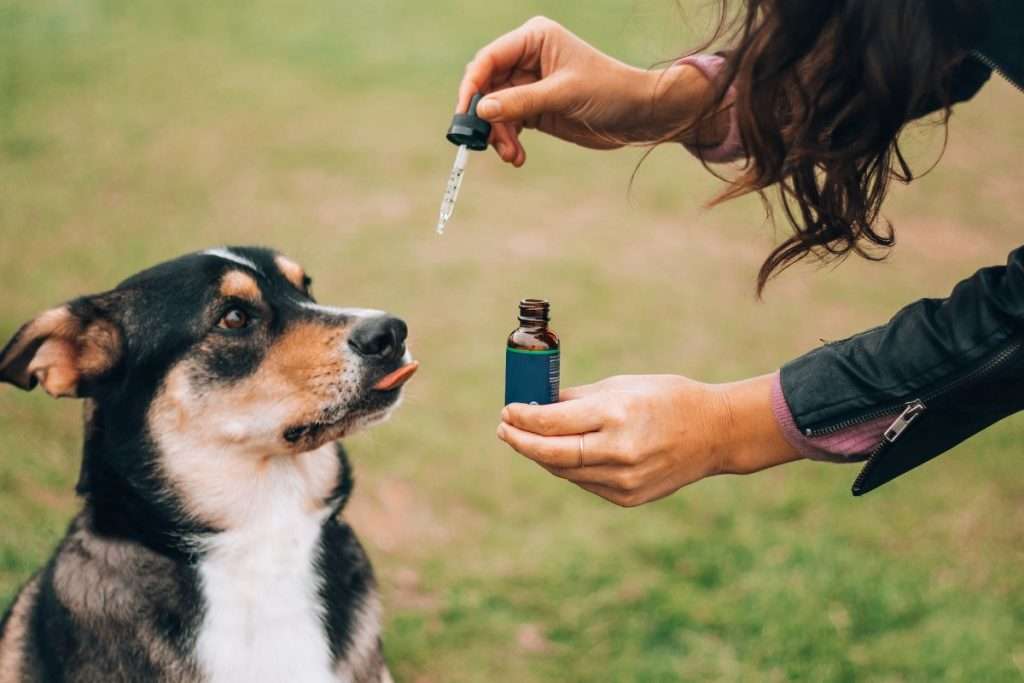
Among alternative, yet equally effective, methods is CBD oil for dogs, an excellent natural pain reliever with a very low risk of side effects. Just like humans, animals also have their own endocannabinoid system. CBD, a compound found in cannabis and hemp, interacts with receptors in the central and peripheral nervous systems, which regulate mood, pain, and other physiological functions.
How to administer pain reliever to your dog
Depending on your pet’s personality and the intensity of the pain, you can choose from several administration methods.
Here are some tips for administering pain medication to your dog:
- Hiding the pill in food: This is the simplest and safest method. Choose a piece of meat, cheese, or ham that your dog enjoys, and make sure the pill is completely covered in food so he can’t see or feel it.
- Using a syringe without a needle: If your dog is reluctant to take the pill hidden in food, you can insert the syringe into his mouth (sideways) and gently press the plunger to release the medication, making sure he doesn’t spit it out.
- Using a pill gun: This is a device that makes it easier to administer medication to dogs. You insert the pill into the pill gun, then place the device in your dog’s mouth, then gently press the button to release the pill.
- Have your vet administer pain medication: If you’re unsure how to administer pain medication to your dog, you can take him to the vet and have a professional administer it.
Additionally:
- Be calm and patient;
- Do not force your dog to take the pill;
- If your dog has difficulty swallowing the pill, you can try crushing it in a little water;
- Reward your dog after taking the pill.
During this process, it is essential to remain calm to minimize stress for your dog, who is already suffering from pain.
-
Product on sale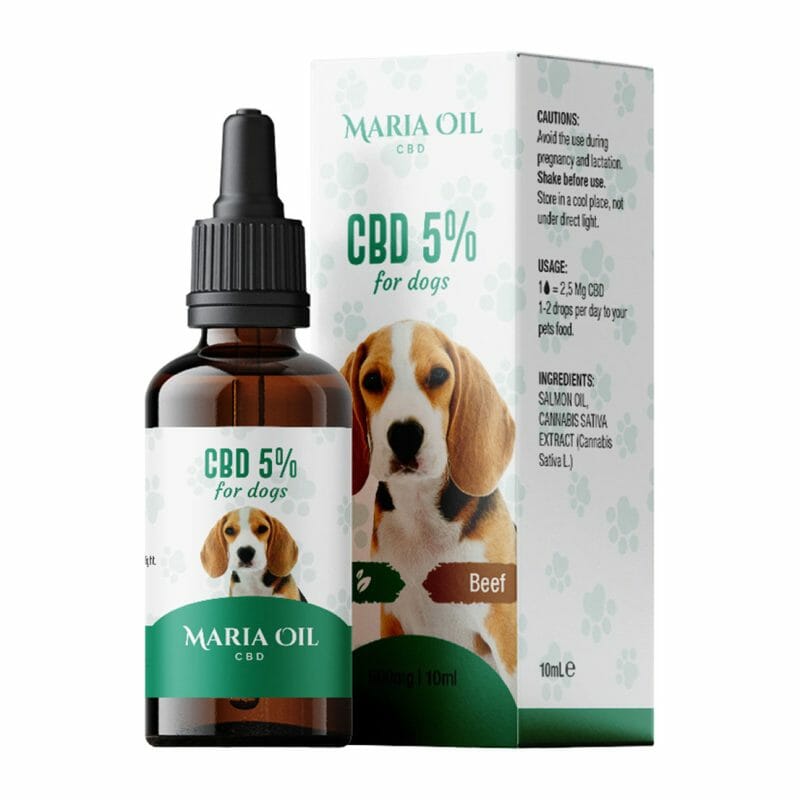 CBD Oil 5% for DogsOriginal price was: £19.00.£13.30Current price is: £13.30.
Can I give my dog a human painkiller?
The answer is a very clear one: no.
Painkillers for dogs, in fact, have completely different properties.
For example, ibuprofen (contained in medications such as Moment) is highly toxic to dogs. More specifically, NSAIDs (nonsteroidal anti-inflammatory drugs), without veterinary supervision, should be completely avoided. These can lead to dysfunction, intestinal problems, and poisoning in dogs. Also be careful with Tylenol, which contains paracetamol, and aspirin.
It’s important, therefore, not to panic and resort to medications we commonly use ourselves, primarily NSAIDs, as they could be dangerous for our four-legged friend. Going to your trusted vet and getting a prescription for a painkiller for dogs remains the best option in this case too.
Over-the-counter pain relievers for dogs
There are pain relievers for dogs specifically designed to be safe and effective even without veterinary supervision, although a consultation is always recommended.
Here are some (mostly natural) remedies you can rely on:
- CBD oil for dogs: A non-psychotropic hemp extract, useful for supporting joint comfort and modulating inflammation in dogs. It can also promote relaxation and appetite in dogs with poor appetite or stress;
- FermaDol Forte: Natural support for joint pain and stiffness in dogs; useful as an adjuvant during flare-ups;
- Confis Ultra 240: Supplement for dogs with osteoarthritis: Helps support cartilage and joints, suitable for adult and senior dogs;
- Artikrill: For dogs with joint problems: Contains EPA and DHA (fish oil) and vitamin E, with basic nutritional anti-inflammatory action on joints, skin, and coat;
- Hip & Joint Mobility+: For dogs with hip dysplasia or other joint conditions: combines devil’s claw, MSM, chondroitin, and turmeric to support mobility and flexibility;
- Jointsure: A multifunctional supplement for dogs, targeting mobility, energy, and joint function, particularly suitable for adult and senior dogs.
Disclaimer: Even natural remedies for dogs should be included in a veterinary plan: diagnosis, dosage, and potential interactions should always be evaluated by a veterinarian, even if a prescription is not required.
Does CBD for dogs have side effects?
As with human medications, dog painkillers can cause side effects, the most common of which are:
- Vomiting;
- Diarrhea;
- Bloody stools;
- Loss of appetite;
- Increased water consumption;
- Skin rashes.
If your dog exhibits any of these signs, it is strongly recommended to contact your veterinarian as soon as possible to schedule a specific evaluation. As discussed in the section on administering human painkillers to dogs, NSAIDs can be extremely dangerous if not supervised by a veterinarian.
-
Product on saleCBD Oil 5% for DogsOriginal price was: £19.00.£13.30Current price is: £13.30.
Natural painkillers for my dog
The first question you ask when your four-legged friend seems to be showing signs of concern is: How can I help my dog who’s in pain?
One of the safest, and often effective, methods is to rely on natural remedies. These include some simple measures that can help your dog gradually recover:
- Rest. Just as with humans, the starting point is rest. If a dog has joint or muscle problems, as often happens with age, it’s necessary to encourage your pet to avoid exerting himself (for example, running around the yard or house) and to remain as calm as possible.
- Rest in a comfortable place. In addition to preventing your dog from making sudden movements, it’s equally important for your four-legged friend to have a comfortable, warm, and clean place to rest. If your dog suffers from joint problems, it’s also advisable to avoid obstacles (such as stairs) in the way to his bed.
- Soft, quality diet. A balanced diet helps restore the digestive system’s function, thus alleviating pain. If your dog has pain anywhere in the mouth, it’s best to offer soft, gentle foods.
- Keep warm. Upon the advice of your veterinarian, you can apply a warm compress to the area causing your dog pain.
In addition to these natural remedies, CBD products support the body in general and have beneficial effects that support your pet’s recovery, as we’ll explore in more detail in the next section.
What is the correct CBD dosage for dogs?
The correct dosage of natural pain relievers for dogs depends on several factors, including the dog’s weight, the severity of the pain, and the specific type of remedy used. For this reason, it’s essential to consult your veterinarian before starting any treatment to ensure the dosage is safe and effective for your pet’s needs.
Indicative dosage example based on weight
| Dog’s weight | Initial approach (indicative) |
| Small dogs (up to 10 kg) | Very low and gradual dosages |
| Medium dogs (10-25 kg) | Moderate amounts assessed by the veterinarian |
| Large dogs (over 25 kg) | Customized dosages based on the condition |
Important: These are general guidelines only. The correct dosage should always be determined by your veterinarian.
Most dosage instructions are based on the dog’s weight. Knowing your dog’s weight is especially important when it comes to CBD dosage for dogs, as it’s a powerful and comprehensive remedy in its own right.
Dosages can also vary depending on the type of natural remedy used. For example, supplements like glucosamine and chondroitin may have different doses than herbs like turmeric or omega-3 fish oil.
Finally, natural painkillers may be available in capsule, tablet, liquid, or special food form. Be sure to administer the remedy in the appropriate form as directed by your veterinarian.
How do I know if painkillers are working?
Let’s say you’ve found an over-the-counter dog painkiller that seems right for your specific case. How can you tell if the treatment is working?
Let’s start with the assumption that many natural substances, such as omega-3 or turmeric, require prolonged use to produce significant results.
That said, to determine if dog painkillers are working, you need to carefully observe your pet’s behavior and physical condition. Here are some signs that might indicate that painkillers are having a positive impact:
- Improved mobility: If your dog had difficulty moving or showed signs of lameness due to pain, an improvement in mobility is a sign of success.
- Increased activity: If your dog is more willing to play, walk, or participate in activities he previously avoided due to pain.
- Behavior changes: A reduction in signs of distress, such as anxiety, agitation, or irritability.
- Appetite and hydration: An increase in food and water intake may indicate that your dog is feeling better overall.
- Improved sleep quality: If pain was affecting your dog’s sleep, you may notice an improvement in the quality of his sleep.
- Reduced expression of pain: Notice if you see fewer signs of distress, such as excessive licking of a body part or whining.
- Reduced anxiety: Some dogs may develop anxiety due to chronic pain.
Evaluating the effectiveness of painkillers should also be discussed with your veterinarian, who can adjust treatment based on your dog’s responses. Consult with him regularly to evaluate the need for adjustments in your pet’s pain management plan.
The benefits of CBD for dogs
Many people don’t know it or think about it, but CBD represents a valid alternative to traditional pharmaceutical remedies and, lately, has also been gaining popularity and the interest of veterinarians worldwide.
For years, the misconceptions surrounding its origin from the cannabis plant have somewhat obscured it from the natural remedies landscape, but the truth is that CBD has multiple beneficial properties.
As a natural anti-inflammatory for arthritis in dogs, thanks to its well-known beneficial properties, CBD can be used in dogs to:
- support cardiac function;
- counter nausea and vomiting;
- stimulate appetite;
- promote calm and reduce anxiety.
In recent years, scientific research has continued to explore the potential use of CBD in dogs with chronic pain, osteoarthritis, and epilepsy.
In 2024, a controlled study on dogs with osteoarthritis observed progressive improvements in pain and mobility scores after using CBD supplements combined with krill oil.
Regarding epilepsy, recent studies from 2025 suggest that CBD may help some dogs reduce the frequency of epileptic seizures when used in conjunction with traditional therapies, always under veterinary supervision.
Although CBD is generally considered well-tolerated, it is always important to consult your veterinarian before using any CBD product for pets.
When to seek veterinary immediately
Some signs require immediate veterinary attention, especially if the dog exhibits:
- sudden, severe pain
- difficulty breathing
- loss of balance
- persistent vomiting
- blood in the stool
- inability to walk
In these cases, it’s important to avoid DIY treatments and quickly contact a professional to identify the cause of the problem and establish the safest treatment.
Legal CBD products for pets
In the UK, CBD products for animals can be sold as long as they comply with current regulations and the requirements set by the relevant authorities. It is essential to choose only products specifically formulated for veterinary use or intended for companion animals, avoiding uncertified solutions or products designed for human consumption.
CBD can be a complementary option to contribute to your dog’s well-being and help improve their quality of life. It is important to purchase pet-specific products from reputable and established companies to ensure you are buying a quality product, manufactured according to applicable standards and with clear information about its composition.
Always start with the minimum dose recommended by the manufacturer or your veterinarian and observe how your four-legged companion reacts. Give their body time to adjust and the product time to show its effects. Furthermore, if you wish to keep a more detailed record, you can note the changes observed day by day; this will allow you to better assess your pet’s response and adjust the dosage accordingly based on their individual needs.Remember that every animal is different and may respond differently. If you have any questions before, during, or after administration, consult your veterinarian, who can advise you on the best way to manage your pet’s well-being.
To find CBD products for pets that comply with applicable regulations and offer quality guarantees, visit our online store, where you can discover and compare different options designed specifically for companion animals.
FAQ
The correct dosage of a painkiller for dogs depends on several factors, including weight, age, health, and type of pain. Therefore, there is no one-size-fits-all amount for all animals. Even for natural remedies like CBD, your veterinarian should always recommend the most appropriate dosage. Generally, many products list dosages in mg/kg, but it’s important to always start with low doses and monitor your dog’s response.
Yes, some dog painkillers can cause side effects, especially if used without veterinary supervision or for prolonged periods. Common symptoms include vomiting, diarrhea, loss of appetite, drowsiness, and gastrointestinal upset. Even natural remedies can cause adverse reactions in sensitive individuals, which is why it’s always advisable to consult your veterinarian before administering them.
The time it takes for them to work can vary depending on the type of product used. Pharmacological painkillers often work within a few hours, while some natural supplements like omega-3s, glucosamine, or CBD may require several days or weeks of consistent use before showing noticeable benefits. Response also varies depending on the dog’s condition and the severity of the pain.
Veterinary-approved painkillers and CBD products formulated specifically for animals are legal if they comply with current regulations. It’s important to choose certified products that are THC-free or contain legally permitted levels, purchasing them from reputable companies. For your pet’s safety, it’s essential to avoid products intended for human use and always follow your veterinarian’s instructions.
Many senior dogs begin taking painkillers or joint supports when the first signs of chronic pain, stiffness, or difficulty moving appear. Limping, reduced mobility, difficulty getting up, or a decreased desire to play can be warning signs. Early intervention, always with the support of your veterinarian, can help improve your senior dog’s quality of life.