Contact us





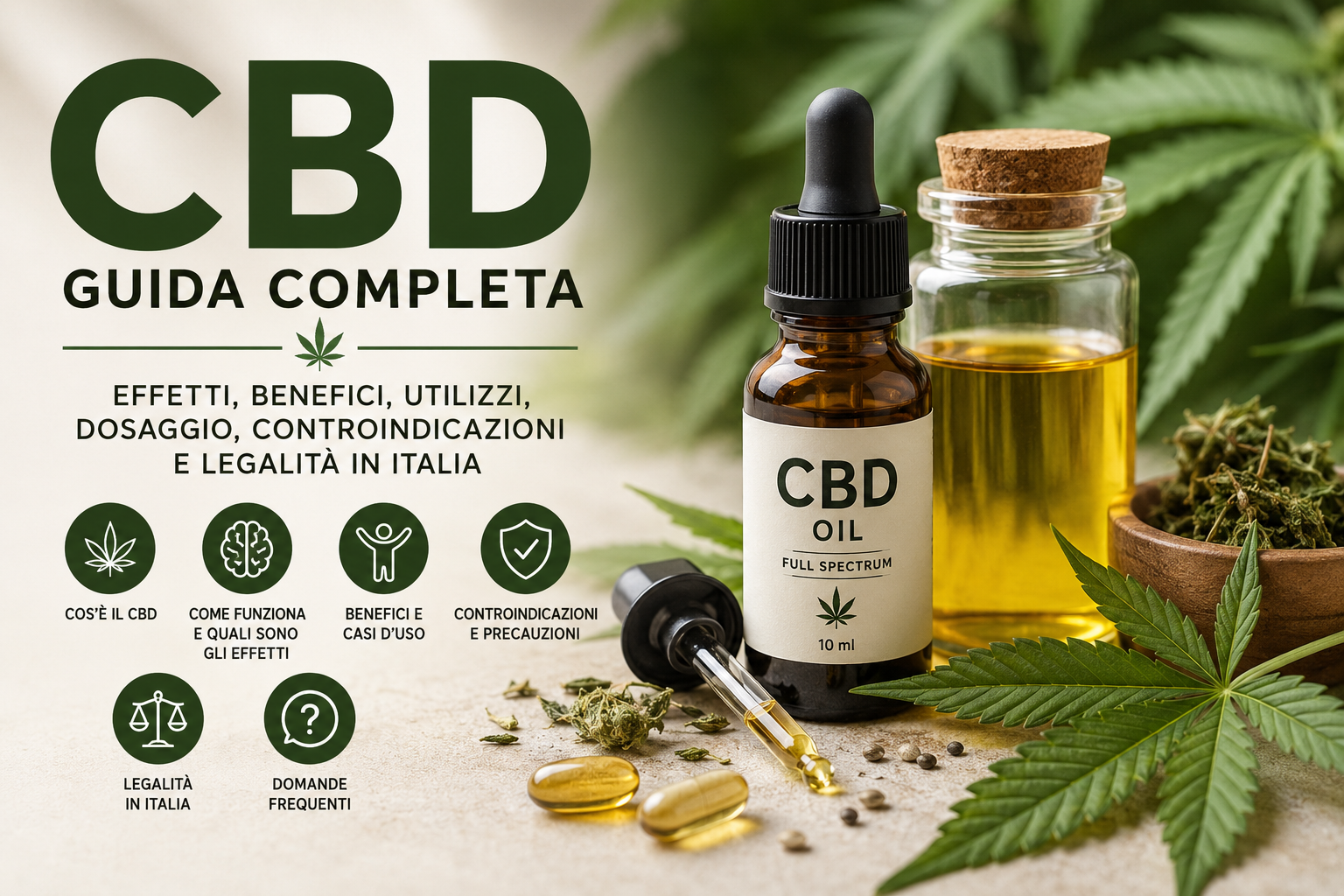
CBD (cannabidiol) is one of the most well-known cannabinoids found in the cannabis plant.
In recent years, it has attracted the attention of researchers, wellness professionals, and consumers thanks to its unique characteristics: it is non-psychoactive, does not cause the “high” typically associated with THC, and is used in numerous products such as oils, capsules, herbal teas, creams, e-liquids, and cosmetics.
Today, we’ll discover together what CBD is, how it works, what effects it can have on the body, possible contraindications, and what the UK regulations require.
What is CBD and where is it extracted from?
CBD (Cannabidiol) is a natural compound belonging to the cannabinoid family, substances found in the cannabis plant.
Unlike THC (tetrahydrocannabinol), CBD:
- Does not alter consciousness
- Does not produce psychotropic effects
- Does not generate the euphoric sensation typical of high-THC cannabis
- It is generally considered well-tolerated by international organizations that have analyzed its safety profile
Today, CBD is extracted primarily from authorized industrial hemp strains, characterized by low THC levels, in what is now commonly referred to as “cannabis light.”
The main formats available
| Formato | Characteristics |
| CBD oil | The most widespread and versatile |
| CBD Capsules | Practical and pre-measured |
| CBD Candies | Easy to take |
| CBD herbal teas | Gradual intake |
| CBD creams | Localized application |
| CBD Liquids | Use by vaping |
| CBD weed | Cannabidiol-rich hemp flower |
| CBD Hashish | Hemp resin with a high concentration of cannabinoids |
-
Product on sale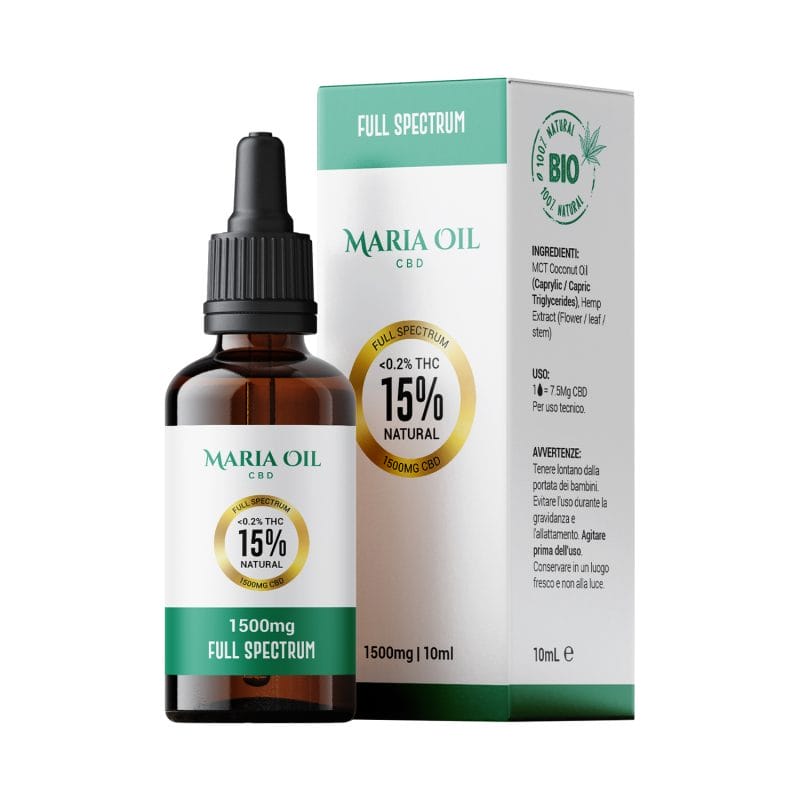 CBD Oil 15% (1500mg) Full SpectrumPrice range: £24.96 through £40.96From 24,96 €
 -
Product on sale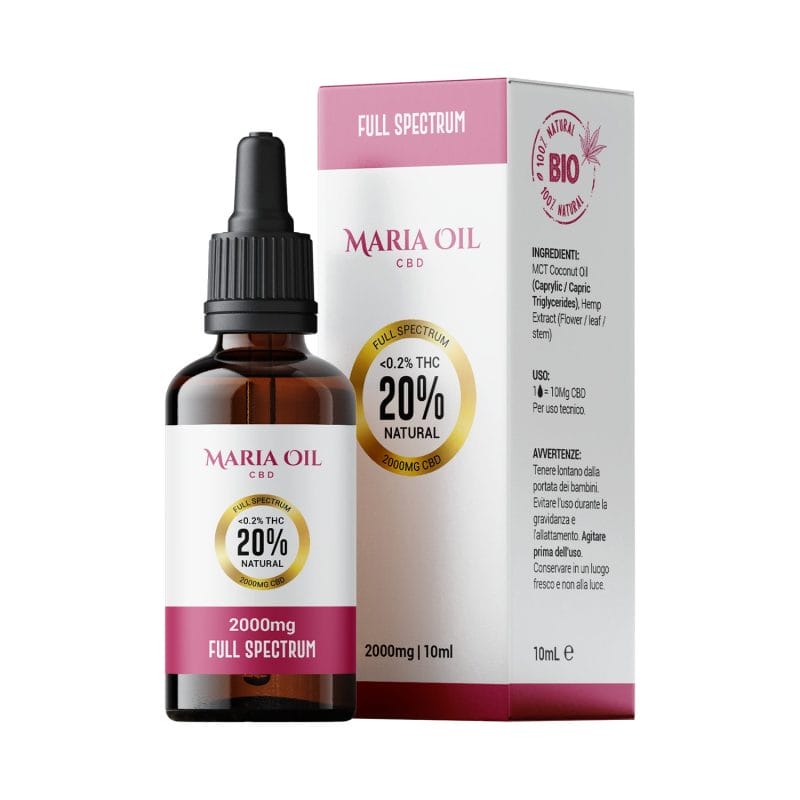 CBD Oil 20% (2000mg) Full SpectrumPrice range: £31.36 through £47.36From 31,36 €
How does CBD work on the body and what effects can it have?
CBD interacts indirectly with the endocannabinoid system, a network of receptors involved in regulating numerous physiological functions, including:
- sleep
- stress response
- mood
- pain perception
- appetite
- general body balance
Unlike THC, CBD does not bind directly to the main cannabinoid receptors CB1 and CB2, but modulates their activity through various biological mechanisms.
The most commonly reported effects
Many people use CBD to promote:
- mental and physical relaxation
- daily stress management
- mental well-being
- recovery after physical activity
- sleep balance
- greater feelings of calm throughout the day
It’s important to note that effects may vary from person to person based on factors such as:
- body weight
- age
- individual sensitivity
- product concentration
- method of administration
What does scientific research say?
Research on CBD has grown significantly in recent years.
A systematic review published in 2023 in Frontiers in Pharmacology analyzed available clinical studies on cannabidiol, highlighting promising results in several research areas, while emphasizing the need for larger, more standardized studies to confirm much of the current evidence.
Another review published in 2023 in the Journal of Clinical Medicine examined CBD’s safety profile, confirming that the compound is generally well tolerated in most subjects studied. The authors, however, emphasized the importance of considering potential drug interactions and individual differences in treatment response.
Overall, the most recent scientific literature suggests that CBD represents an area of great interest for biomedical research, but that further high-quality clinical studies are needed to more precisely define efficacy, optimal dosages, and long-term safety.
What are the main benefits and use cases of CBD?
Interest in CBD stems primarily from its versatility.
Among the most common uses are:
CBD for daily relaxation
Many people incorporate CBD into their evening routine to create a moment of relaxation.
CBD for mental well-being
CBD is often chosen by those who want to promote a greater sense of balance during particularly intense or stressful times
CBD for athletes and physical recovery
Some athletes use CBD products as part of their post-workout recovery routine.
CBD for sleep
Although it cannot be considered a treatment for insomnia, many users choose CBD before bed as part of their evening ritual.
CBD for pet well-being
There are specific formulations for dogs and cats, developed specifically for their needs.
-
Product on saleCBD Oil 15% (1500mg) Full SpectrumPrice range: £24.96 through £40.96From 24,96 € -
Product on saleCBD Oil 20% (2000mg) Full SpectrumPrice range: £31.36 through £47.36From 31,36 €
What are the contraindications and precautions to be aware of?
Although CBD is generally considered safe, it is not completely free of possible side effects.
Among the most frequently reported in the scientific literature are:
- drowsiness
- tiredness
- diarrhea
- changes in appetite
- dry mouth
Available studies indicate that these effects tend to be dose-dependent and generally mild.
When is it appropriate to seek medical advice?
Before taking CBD, it is advisable to consult a healthcare professional if:
- you take medications regularly
- you suffer from chronic conditions
- you are pregnant or breastfeeding
- you are undergoing specific therapies
The World Health Organization has highlighted that some adverse reactions may result from possible drug interactions.
Is CBD legal in UK?
The legislation surrounding CBD is complex and subject to constant updates.
In general:
| Aspect | Status |
| CBD Substance | Not considered a controlled substance when compliant with current regulations |
| Medical prescription | Generally not required for many CBD products. |
| THC | Must comply with the legal limits established under UK law |
| Commercialization | Permitted provided products meet applicable regulatory requirements |
CBD regulations in the United Kingdom are complex and subject to ongoing updates and regulatory changes.
In general, CBD is not considered a controlled substance provided that it complies with applicable legal requirements. In addition, the World Health Organization (WHO) has stated that pure CBD does not exhibit properties that would justify its inclusion among internationally controlled substances.
FAQ
There’s no universal dosage that works for everyone. The number of drops depends on factors such as body weight, oil concentration, individual sensitivity, and the intended use. It’s generally recommended to start with low doses and gradually increase.
The percentage indicates the amount of CBD contained in the oil. A 5% oil contains a lower concentration of cannabidiol than a 10%, 20%, or 30% oil. In practical terms, a single drop of 5% oil generally provides about 2 mg of CBD, while a drop of 10% oil provides about 4 mg. 20% formulations provide an average of about 6-7 mg per drop, while 30% formulations can provide up to about 10 mg per drop. The higher the percentage, the greater the amount of CBD ingested with each drop.
The time it takes for the effects to take effect may vary depending on the product used. Sublingual oil generally takes effect faster than capsules or edibles.
In the UK, CBD is legal without a prescription. It can be bought and used freely as long as the product complies with regulations, meaning it must contain very low levels of THC and meet safety and labeling rules (including “novel food” requirements).
Yes. Although generally well-tolerated, CBD may interact with some medications. If you are currently undergoing any medications, it’s best to consult your doctor.
Drug tests typically detect THC, not CBD. However, some full-spectrum products may contain trace amounts of THC, which, under certain circumstances, could affect the test result.