Contact us





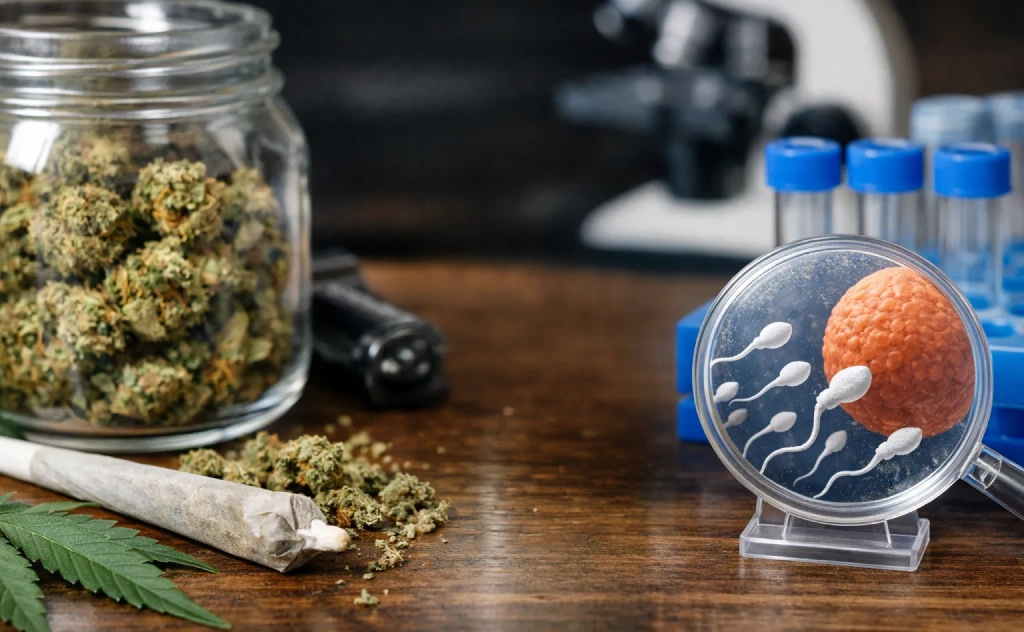
Amidst a thousand beliefs, suppositions, and schools of thought, we want to begin with a question: are cannabis and male fertility somehow related?
From ordinary people to enthusiasts and scholars, many are wondering this. And the scientific literature on the subject is quite extensive, especially in recent years.
This is why several mechanisms involved have been clarified, leaving very little room for doubt.
The answer is that it depends.
It depends on the frequency, quantity, duration of use, and the THC content (or lack thereof) of the plant being consumed.
What effects does cannabis have on male fertility?
Available evidence allows us to suggest some potential effects of cannabis on male fertility, especially with frequent and prolonged use, such as:
- Reduction in sperm concentration, with a number lower than considered optimal
- Decreased sperm motility, which can make it more difficult to reach the egg
- Alterations in sperm morphology, with an increase in forms considered non-functional
- Interference with hormonal balance, particularly testosterone levels and hormones involved in spermatogenesis
- Possible increase in oxidative stress, a factor that can affect semen quality
- Effects are generally reversible, tending to diminish after cessation of use, over the course of several cycles of sperm production
Despite the extensive literature on the subject, experts urge a cautious approach, especially when the goal is conception, emphasizing that research is still evolving and does not allow for definitive conclusions.
The impact of cannabis on sperm movement
Sperm motility is one of the key parameters of male fertility, as it represents the ability of sperm to move efficiently to reach the egg.
Some studies suggest that cannabis, particularly THC, may also affect this aspect, causing:
- Reduction in progressive motility, i.e., the linear and directional movement necessary for fertilization.
- Alteration of the cellular signals that regulate sperm movement, linked to THC’s interaction with the endocannabinoid system
- Reduced efficiency in reaching the egg, especially with frequent and prolonged use
- Dose-dependent effects, more evident with high THC levels and chronic use
- Possible reversibility, with improved motility after a period of withdrawal, consistent with the timing of spermatogenesis
Scientific research on cannabis and male fertility
For greater clarity, we present the results of two recent studies that have sought to clarify the link between cannabis and male fertility, focusing primarily on the effects of cannabinoids on seminal parameters and reproductive hormones.
The available studies show results that are not always unequivocal, but they are useful for painting a more balanced picture:
- 2022 study, “Impact of cannabinoids on pregnancy, reproductive health, and offspring outcomes,” by Jamie O. Lo, Jason C. Hedges, and Guillermina Girardi: This study suggests a possible association between cannabis use and reduced semen quality, with effects on sperm concentration, motility, and morphology. Potential hormonal alterations, particularly in testosterone levels, are also reported, although the results varied across the studies analyzed.
- A 2025 study, “Cannabis sativa extract and fertility: Preclinical evaluation in male and female Wistar rats,” by Alana C. Costa, Cícero A C Pereira, Arquimedes Gasparotto Jr., Alana A K Garcia, Emerson L B Lourenço, and Helena P G Joaquim, found no significant effects on sperm production, reproductive organ structure, or hormone levels, suggesting that the impact may depend on dose, duration of exposure, and differences between animal models and humans.
Overall, the evidence indicates that the effect of cannabis on male fertility is not automatic or uniform for everyone, but may vary based on several factors. Therefore, the research urges caution in interpreting the data and emphasizes the need for further studies specifically in humans.
Does light cannabis have the same effects on male fertility?
Generally, consuming light cannabis is considered less problematic when it comes to male fertility, but this doesn’t mean it has no effects, especially if used frequently.
The low THC content, within legal limits, reduces the risk of significant interference with the mechanisms that regulate sperm production and quality, which scientific studies have found to be primarily associated with THC.
The most prudent option?
CBD products, which are completely THC-free, such as Broad Spectrum 15% CBD Oil.
-
Product on sale CBD oil 15% (1500mg) Broad SpectrumPrice range: £24.96 through £40.96From 24,96 €
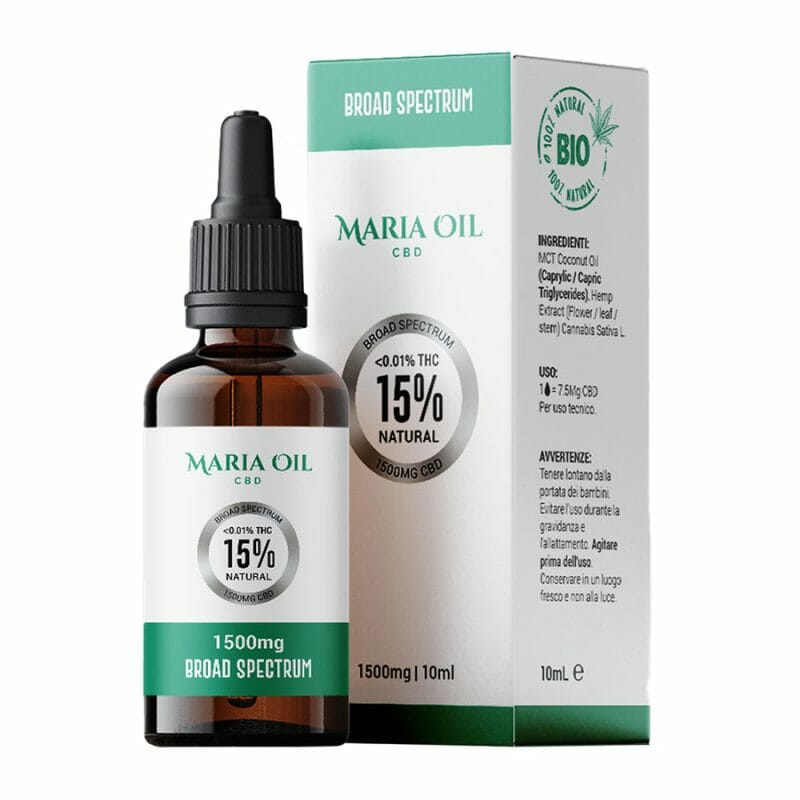
If you’re unfamiliar with CBD, you should know that it’s a substance naturally produced by the cannabis plant, which doesn’t produce psychoactive effects and doesn’t appear to directly affect spermatogenesis.
In addition, CBD also appears to have positive sexual effects, thanks to its action against anxiety, stress, and depression.
It’s all about the right amount, conscious use, and understanding your body. CBD dosage must therefore be adapted to the individual.
Visit our CBD Shop, Maria CBD Oil, where you’ll find a wide selection of products useful for a wide variety of issues or needs!
FAQ
Based on current evidence, the effects do not appear to be permanent. Frequent use of THC-rich cannabis can cause temporary changes in sperm quality, which tend to improve after discontinuation, within 2–3 months.
There is no evidence that cannabis makes a man permanently infertile. However, frequent and prolonged use of high-THC cannabis may be associated with temporary changes in sperm quality, which tend to improve after discontinuation.
Many specialists recommend, as a precaution, reducing or discontinuing THC-containing products while trying to conceive. THC-free CBD, on the other hand, is considered more compatible, although careful use is still recommended.